HubSpot is now a real option for organizations that need a HIPAA-compliant CRM without giving up modern marketing, sales, and service tools.
That is a big shift.
For years, healthcare teams liked HubSpot’s usability and automation but had to rule it out for workflows involving protected health information. That changed when HubSpot announced HIPAA support and expanded its capabilities for handling sensitive data.
Healthcare data risk is still moving in the wrong direction. HIPAA Journal’s 2026-updated healthcare breach statistics say 725 large healthcare data breaches were reported in 2024, and the number of affected individuals rose 58% year over year to more than 289 million.
For providers, therapy companies, digital health businesses, and healthcare marketers, secure systems are no longer optional background infrastructure. They are part of the day-to-day operations.
In this guide, we’ll break down what HubSpot’s HIPAA support actually means, who it helps, where it fits, what it does well, where teams still need caution, and why this update matters well beyond healthcare.
What HubSpot’s HIPAA Support Means
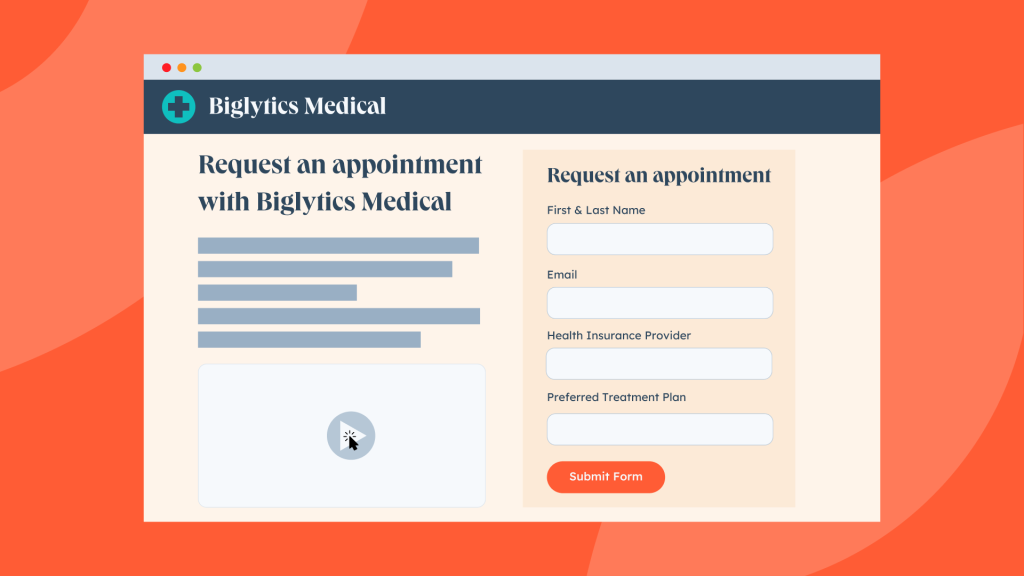
Source: HubSpot
HubSpot’s update means eligible customers can use HubSpot’s Smart CRM and sensitive data tools in ways that support HIPAA-regulated workflows when the account is properly configured and the organization follows the right operational controls.
HubSpot’s announcement said customers can safely store sensitive data in Smart CRM and operate HubSpot’s products in compliance with HIPAA, backed by added security and privacy protections.
That’s important to note: this doesn’t mean every HubSpot account is automatically ready for healthcare use. HIPAA support depends on the product setup, your sensitive data settings, how your teams use the system, and whether your organization handles data in accordance with HIPAA requirements.
A 2026 HubSpot blog post says that to store HIPAA-covered data, customers must enable sensitive data and select both the Health or Medical Data option and the checkbox confirming they are a HIPAA-covered entity or business associate.
In short, HubSpot can now support healthcare use cases that were previously off-limits, but this capability still needs to be implemented correctly.
Why This Matters in 2026
This is a bigger story than a single product update.
Healthcare organizations are under pressure to modernize patient communication, intake, retention, follow-up, and service operations. At the same time, they have to protect data more carefully than ever.
Many teams have been stuck between older healthcare-specific systems that are rigid and modern CRM tools that historically were not suitable for PHI-related workflows.
HubSpot’s move changes that equation. It opens the door for organizations that want a single system for CRM, marketing automation, service, forms, reporting, and workflow management, without immediately disqualifying the platform for HIPAA-sensitive environments.
That makes it relevant not only to large healthcare networks but also to therapy groups, behavioral health businesses, specialty clinics, telehealth providers, research organizations, and healthcare-adjacent service companies.
It also matters because many healthcare teams do not just want “storage.” They want a system that helps them work. They want patient communication tracked properly, follow-up handled consistently, internal handoffs improved, and reporting made easier.
HubSpot has always been strong on usability and workflow design. HIPAA support makes those strengths far more relevant to regulated industries.
What Features Support HIPAA Use Cases in HubSpot
HubSpot’s HIPAA support is tied to a set of security, privacy, and sensitive-data controls rather than a single switch.
Sensitive data controls
HubSpot’s sensitive data tools are the foundation. These allow organizations to identify and manage specific types of sensitive information inside the CRM. HubSpot states that eligible customers can store HIPAA-covered data once the correct categories are selected and the account is configured appropriately.
Access controls and authentication
A HIPAA-ready CRM setup needs role-based access and strong user controls. HubSpot highlights advanced authentication features, inactive-session timeouts, and restricted access to sensitive data as part of its sensitive-data offering.
That is critical because HIPAA risk is often less about the software existing and more about who can reach what inside it.
Audit logs and monitoring
Healthcare organizations need accountability. HubSpot’s announcement and healthcare-oriented materials highlight audit logs and reporting as part of the broader story around secure use.
Those tools matter because teams need to review access and understand changes in regulated environments.
Product-specific limitations and controls
HubSpot also documents where sensitive data changes product behavior. For example, once sensitive data is enabled, some notifications no longer show previews by default, and certain AI-powered features are limited when HIPAA-protected sensitive data is enabled.
That kind of detail matters because healthcare teams need to know not just what the platform can do, but how operations change when protected data is involved.
Where HubSpot Is Useful for Healthcare and Therapy Organizations
The real question is not whether HubSpot supports HIPAA. The real question is where that support creates practical value.
Therapy Practices and Behavioral Health Groups
Therapy groups and behavioral health practices often deal with heavy administrative work: intake, scheduling, reminders, ongoing patient communication, follow-up, and lead handling from referral or inquiry channels. A CRM that supports HIPAA-related workflows can help consolidate those functions into a single system.
HubSpot is especially useful here because it is strong at forms, automation, communication workflows, task assignment, and team visibility. For therapy businesses trying to reduce admin burden while still protecting patient information, that combination can be powerful when implemented carefully. The benefit is not just security. It is operational clarity.
Healthcare Providers and Clinics
Clinics, specialty practices, and provider groups can use HubSpot to centralize communication history, automate reminders, support intake workflows, and coordinate patient-facing activity more cleanly. The advantage is that marketing, front-office, and service-related teams can work from a single record structure rather than passing information between disconnected tools.
That does not replace an EHR. It should not be treated like one. But it can complement the broader patient relationship and communication layer around appointments, follow-up, education, referral management, and service responsiveness.
Medical Research and Trial Operations
Research organizations handle participant communication, enrollment workflows, status tracking, and internal coordination. HubSpot’s updated support can make the platform more viable for secure communication and workflow design in these environments, especially where the organization needs better intake and engagement processes tied to regulated data handling.
Health Insurance and Member Services
Insurance and member-facing organizations can use HubSpot to improve service responsiveness, track interactions more clearly, and support communication workflows with stronger oversight. The value here comes from combining service structure with CRM visibility in a single environment.
Home Healthcare and Digital Health
Home healthcare, telehealth, and digital health companies often need to coordinate across inquiry handling, scheduling, communication, and service follow-up. These businesses can benefit from HubSpot’s workflow engine and CRM structure, especially when growth has outpaced older administrative systems.
Why HubSpot Stands Out Compared with Older Healthcare Tools
A lot of healthcare software is good at compliance but bad at usability. A lot of mainstream CRM software is good at usability, but historically weak for healthcare compliance.
HubSpot stands out because it has always been strong on adoption. Teams can actually use it. Marketers, sales staff, service teams, and administrators usually find the interface more approachable than many legacy systems. That matters because a tool that is theoretically secure but practically ignored by the team does little.
HubSpot also brings together CRM, forms, reporting, workflows, content, marketing, and service tools. That all-in-one structure is one of the main reasons its HIPAA support matters. It is not just another secure data store. It is a platform healthcare businesses can use to improve how work gets done.
What HubSpot HIPAA Support Does Not Mean
This part needs to be said clearly.
While HubSpot supports HIPAA use cases, it doesn’t mean every healthcare organization can turn it on and operate without process discipline. HIPAA compliance is still shared responsibility. The platform can provide the technical capability, but your team still needs the right governance, access controls, policies, training, integration review, and internal standards.
It also does not mean HubSpot becomes an EHR replacement. For most healthcare organizations, HubSpot should be seen as a CRM and workflow platform that can now safely support additional healthcare-related use cases, rather than the clinical system of record for everything.
And it does not mean every feature behaves exactly the same once protected data is enabled. HubSpot’s own knowledge base makes it clear that sensitive data affects how some tools work, including certain notifications and some AI-generated insights.
API Integrations and Connected Systems
One reason this update matters so much is that healthcare operations rarely run on a single system.
A CRM may need to connect with scheduling software, patient management tools, intake systems, billing tools, or internal data sources. HubSpot’s API and ecosystem matter here because integration is often the difference between a secure workflow that actually saves time and one that just creates another data silo.
HubSpot’s developer and sensitive data materials show that the company is thinking about these use cases not only in the app itself, but also in how sensitive data can be handled in developer environments and integrations. That gives healthcare organizations more room to design connected systems without giving up CRM usability.
ActiveCampaign and Other HIPAA-Supporting Alternatives
HubSpot is not the only option in this space.
ActiveCampaign is also actively positioning itself for HIPAA-related healthcare use cases.
Its 2026 healthcare and compliance materials say the platform can be configured to support HIPAA-compliant marketing and points to security controls, authentication features, and healthcare-focused communication use cases.
Its security pages also state that the company is focused on HIPAA compliance, and its data center materials say Enterprise plans support HIPAA features for US-based healthcare organizations.
Read More: Comparing HubSpot vs. ActiveCampaign
The practical difference is that HubSpot is the stronger all-in-one CRM platform for businesses that want marketing, sales, content, service, and CRM tied together in one environment.
ActiveCampaign is often stronger for healthcare organizations that care most about marketing automation and secure communication workflows, without needing the same level of CRM depth.
Why Working with a HubSpot Partner Matters More Now
This update makes HubSpot more powerful for healthcare teams, but it also raises the stakes of implementation.
If your account settings, sensitive data categories, permissions, workflows, forms, or integrations are poorly configured, the platform becomes harder to trust. Healthcare teams do not need a sloppy rollout with a regulated data footprint. They need structure.
That is one reason working with a HubSpot partner can be valuable. The right partner helps you think through more than feature activation. They help with architecture, user access, workflow design, automation boundaries, integration review, and operational setup. That work matters more when the platform is being used in a regulated setting.
Final Thoughts
HubSpot’s HIPAA support is a meaningful shift in the CRM market.
For years, healthcare organizations, therapy practices, and healthcare-adjacent companies wanted the flexibility of HubSpot without the immediate compliance barrier. Now the platform has crossed that line and opened up a much wider set of use cases.
That matters because healthcare teams want more than secure storage. They want systems that improve communication, streamline follow-up, reduce admin friction, and enable different teams to work from a single source of truth. HubSpot is now far more relevant in that conversation than it was before.
The right takeaway is not that HubSpot magically solves healthcare compliance on its own. It does not. The right takeaway is that healthcare organizations now have one more serious option for a CRM that balances usability, automation, and the secure handling of sensitive data.
Frequently Asked Questions
Is HubSpot HIPAA compliant now?
HubSpot now supports HIPAA-related use cases for eligible customers through its sensitive data tools and account controls. That means organizations can operate HubSpot in compliance with HIPAA when the account is properly configured, and the business follows the appropriate internal safeguards.
What HubSpot plans support HIPAA-related use cases?
HubSpot’s healthcare-oriented materials point to HIPAA support through its Smart CRM and sensitive data functionality, and HubSpot’s own 2025 healthcare CRM article says these features are available for eligible subscribers, including Enterprise-level use cases. Teams should confirm current plan eligibility directly before rollout.
Can therapy practices use HubSpot now?
Therapy and behavioral health organizations can use HubSpot for intake, communication, scheduling workflows, and administrative coordination when the account is properly set up for HIPAA-sensitive use. The key is using it within clear controls and suitable operational processes.
Can HubSpot store protected health information?
HubSpot’s knowledge base says customers can store HIPAA-covered data when they enable sensitive data correctly and identify themselves as a HIPAA-covered entity or business associate in the account settings.
Does HubSpot offer a Business Associate Agreement?
HubSpot’s legal and healthcare materials on sensitive data and HIPAA support indicate that healthcare-related use requires appropriate contractual and product frameworks. Organizations evaluating HubSpot for PHI-related use should review current legal terms and confirm agreement details directly during procurement.
What security features support HIPAA workflows in HubSpot?
HubSpot highlights sensitive data controls, encryption-related protections, access restrictions, advanced authentication features, audit logs, session controls, and security recommendations as part of the environment supporting regulated use cases.
Does enabling HIPAA-sensitive data change how HubSpot works?
HubSpot documents that some notifications and certain AI-powered features behave differently once sensitive data is enabled. That is one reason healthcare teams should review the product-level impact before rolling changes out broadly.
Is HubSpot a replacement for an EHR?
HubSpot should be viewed as a CRM and workflow platform, not a replacement for a clinical record system. It can improve communication, intake, marketing, service, and coordination, but it should not be confused with a full electronic health record platform.
How does HubSpot compare with ActiveCampaign for HIPAA-related use?
HubSpot is the stronger choice for organizations that want a broader CRM, service, and operations platform. ActiveCampaign is often a strong choice for healthcare businesses that prioritize secure marketing automation and patient communication workflows.
Why should healthcare teams work with a HubSpot partner?
Because healthcare implementation is not only about turning features on. Teams need help with permissions, workflow structure, integrations, governance, and rollout planning. A good HubSpot-certified partner, such as the US-based Automation Strategy Group, can help ensure the platform is both useful and secure.