case study
Turning Underused Automation Into a Revenue Engine (ActiveCampaign + Salesforce)
We re-engineered ActiveCampaign and Salesforce to support Advent’s research-driven storytelling model, transforming passive automation into a system that actively supported growth and revenue.

Client Overview
Advent Moves People had invested in ActiveCampaign and Salesforce, but both platforms were underutilized and operating more like disconnected systems than a cohesive growth engine. Marketing and sales teams were running into inefficient, frustrating processes and inconsistent follow-up—creating gaps in visibility, accountability, and conversion.
Automation Strategy Group partnered with Advent to audit their tech stack, map their current sales and marketing processes, and rebuild their lifecycle approach so ActiveCampaign and Salesforce worked together as intended. The result was a fully integrated system, improved alignment between teams, smoother operations, and a faster path from lead to closed business.
The Challenge
Despite having ActiveCampaign and Salesforce in place, the day-to-day reality looked like this:
- Platforms were underutilized: key capabilities (automation, segmentation, scoring, reporting) were either not configured or not consistently used.
- Inefficient workflows: manual steps and “workarounds” created delays, inconsistent follow-up, and friction for both teams.
- Misalignment between sales and marketing: differing definitions of lead stages, unclear handoffs, and inconsistent data made it hard to know what was working and who owned the next steps.
The bottom line: leads were harder to manage, reporting was less trustworthy, and pipeline progress depended too heavily on individual effort rather than a repeatable system.

Our Approach & Solution
This project centered on three pillars: audit → process mapping → implementation & enablement.
1) Full audit of the tech stack
We began by reviewing how ActiveCampaign and Salesforce were configured and used in practice, including:
- Contact/account record structure and field consistency
- Tagging strategy and segmentation approach
- Automation logic and workflow health (including edge cases)
- Lead capture sources and routing logic
- Pipeline stages, definitions, and current usage behavior
- Reporting gaps and “trust issues” in the data
- Team workflows (what people actually do vs. what the system expects)
This audit helped us pinpoint not just what was missing, but what was causing friction and wasted effort day to day.
2) Process mapping: how leads move from marketing → sales
Next, we mapped the real end-to-end process for Advent’s growth workflow. This included:
- How leads enter the system (by channel/source)
- What qualifies a lead for sales attention
- How and when follow-up happens
- Where leads stall and why
- What information sales needs at each step
- How handoffs should work between teams
The output was a shared, documented lifecycle model that both teams could agree on—reducing ambiguity and creating accountability.
3) Platform optimization: using ActiveCampaign & Salesforce to their full capabilities
With a clear process defined, we rebuilt the system so the tools supported the process—not the other way around.
ActiveCampaign improvements
We implemented a more structured lifecycle and automation model, including:
- Clean segmentation framework (so targeting wasn’t dependent on one-off tags)
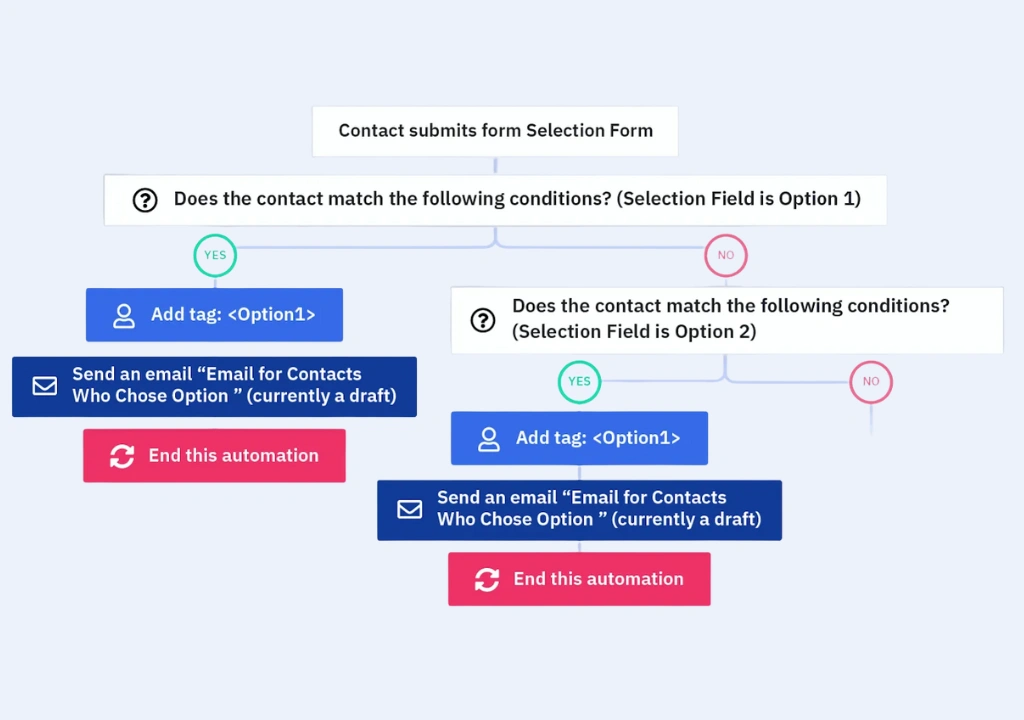
- Standardized automations for lead capture, nurture, follow-up, and re-engagement
- Consistent rules around list hygiene and engagement management
- Clear trigger logic so the right message reached the right contact at the right time
- Improved visibility into engagement behavior (opens/clicks/intent signals)
Full integration: ActiveCampaign ↔ Salesforce
Finally, we ensured the platforms functioned as a connected system:
- Data mapped cleanly between tools (contacts, lead status, lifecycle stage, activity)
- Rules established for when records are created/updated, and by which system
- Consistent handoff signals so sales could trust what marketing sent
- Reduction of duplicates and inconsistent record states (a common cause of reporting issues)
The Results
- ActiveCampaign and Salesforce fully integrated, enabling reliable data flow and better visibility across the funnel
- Sales and marketing aligned on strategy, stage definitions, and lead handoff responsibilities
- Efficiency of operations increased, with fewer manual steps and more consistent follow-through
- More sales and closed business, supported by stronger lifecycle execution and fewer leaks in the process
- Shorter sales cycle, driven by faster response time, better lead context, and clearer stage progression
Business Impact
This wasn’t a project to “configure tools” but instead a shift from fragmented execution to a connected system that consistently turns demand into pipeline.
With faster, more reliable follow-up and cleaner handoffs between marketing and sales, Advent reduced funnel drop-off and improved conversion. Clear lifecycle stages, better lead context, and fewer manual steps helped opportunities move through the pipeline more efficiently, shortening the sales cycle. And with tighter data consistency between ActiveCampaign and Salesforce, reporting became trustworthy; making it easier to spot what’s working and invest confidently.
Seeing Similar Gaps in Your Automation Stack?
If your ActiveCampaign or Salesforce setup or integration feels overwhelming, we can help you build it into a revenue-generating system.